

The Blacksmith Shop: A Rockport Story Being Written Again
There are buildings in Rockport that you pass every day without necessarily thinking about all the lives that have passed through them.
The Blacksmith Shop is one of those buildings.
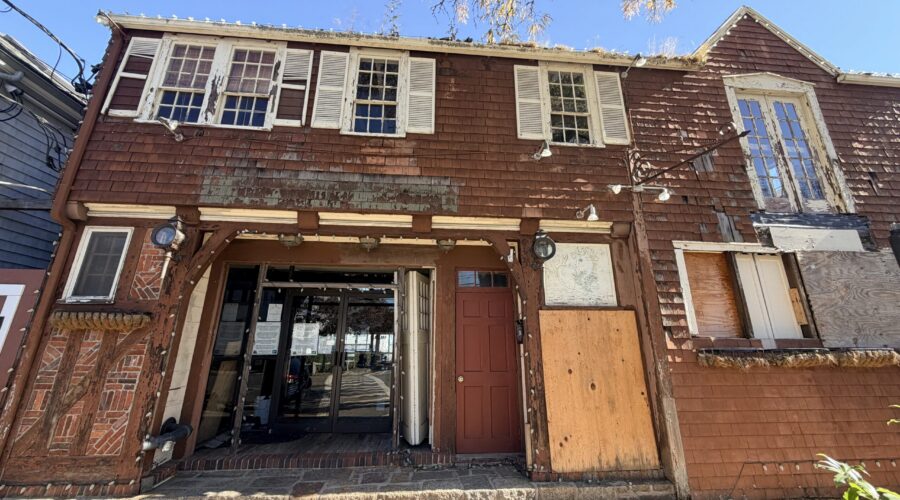
Today, the historic property on Mount Pleasant Street is in the middle of a major transformation. Cape Ann Works is working to bring the long-closed Blacksmith Shop back to life as a combination restaurant, café, culinary training center and housing for people participating in its workforce programs.
But before it became a redevelopment project, the Blacksmith Shop had already lived several lives.
And some of those stories are pretty remarkable.
It started with an advertisement
The story of the Blacksmith Shop restaurant begins in 1929, when Melissa McMeekin Collins and her daughter, Melissa Collins Smith, came to Rockport after seeing an advertisement in the New York Times.
The advertisement described an opportunity to rent a restaurant in “quaint Rockport by the sea” — an old blacksmith shop beside a “babbling brook.”
When they walked into the building, Melissa’s mother immediately saw the possibility.
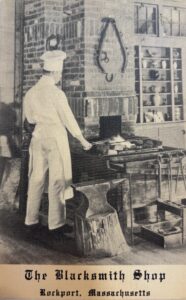
She envisioned steaks and chops being broiled over the coals of the old blacksmith forge.
That vision became reality.
The restaurant opened in June 1929, serving lobster, steaks, fish and chops cooked over the forge. The beginning, however, was anything but glamorous. The first week was apparently so slow that Melissa later remembered that anyone other than her mother might have simply packed up and gone home.
Then came a theater connection.
D.C. Brewster, who operated a school of theater in Rockport, brought a group to the restaurant after enjoying a meal there. Before long, the Blacksmith Shop had a new source of customers, and business began to snowball.
It was a pattern that would continue for decades.
The restaurant became a destination for visitors, performers, locals and, apparently, more than a few recognizable names. Actors including James Cagney and Bette Davis were among those associated with the restaurant’s clientele, while comedian Red Skelton reportedly came regularly while his son was receiving treatment at Children’s Hospital in Boston. The family also remembered the excitement whenever Ted Williams came to town.
And this was not merely a place where people came to eat.
It became a place where people gathered.
From forge to harbor
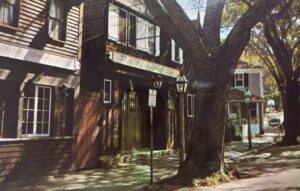
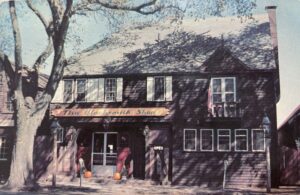
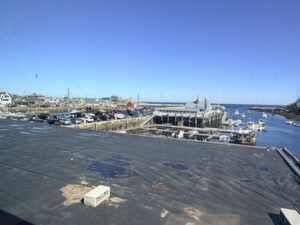
The original restaurant was at 9 High Street. In 1934, the Smith family purchased the present site, giving diners something the first location could not: a view of Rockport Harbor and its boats.
The restaurant continued to evolve.
According to family recollections, the building was expanded more than once, including additions in the 1950s that extended the dining space over the harbor.
There were also the practical challenges of running a restaurant before modern refrigeration. Ice and coal briquettes arrived by horse and wagon, and one local supplier eventually suggested that the family consider another property — an old barn beside his office on the harbor.
The Blacksmith Shop became much more than its name suggested.
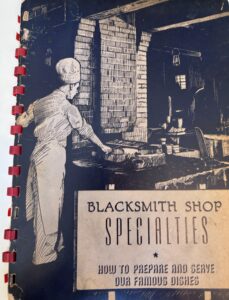
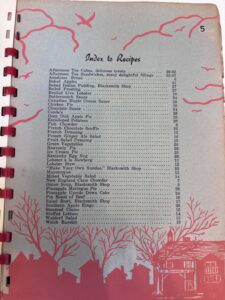
There were pastries, Anadama bread, Cape Ann blueberry cake, rolls, desserts and Joe Frogger cookies. Anadama bread has one of those wonderfully colorful Rockport stories behind it. According to the Smith family history, a local fisherman named Joe Neimi supposedly grew tired of being served cornmeal mush and molasses by his wife, Anna. One day, he mixed the mush and molasses with flour and yeast and baked it into bread, reportedly muttering, “Anna, damn her!” The name stuck, and Anadama bread was born. The Smith family later baked the bread commercially in Rockport, and it became part of the Blacksmith Shop’s culinary legacy.
There was also the Joe Frogger, a large, flat molasses cookie with roots in Marblehead. The cookies were traditionally made with rum and were prized for their remarkably long shelf life, making them particularly popular with fishermen who needed something that would keep. And then there was Melissa’s Garlic Dressing, a house specialty made in large quantities and served at every table, with its own memorable label promising: “It Makes a Salad Sing.”
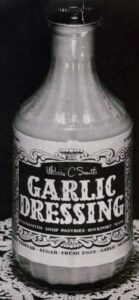
For a restaurant that once served hundreds of meals a day during its summer heyday, these weren’t just menu items. They became part of the stories people remembered about the place.
One of those stories recently came back to Cape Ann Works: a man who started at the restaurant as a busboy eventually worked his way up to become a chef.
That story may be especially fitting given what is planned for the building today.
A restaurant that was already a training ground
When Mechelle Brown, Executive Director of Cape Ann Works, talks about the Blacksmith Shop, one of the things that struck her most is how much of the organization’s current vision echoes what was happening there generations ago.
Cape Ann Works is a nonprofit organization focused on helping people connect with employment, training and the support they need to succeed in the local workforce. Since launching in 2022, the organization has worked with businesses and community partners on issues ranging from workforce development and transportation to housing and job readiness.
Brown describes the original Blacksmith Shop as a place where employees were trained and housed — remarkably forward-thinking for its time.
That history helped make the building particularly compelling to Cape Ann Works.
But there was another reason.
The Blacksmith Shop had been sitting empty since 2011, and Brown says its condition represented more than a vacant building. It was a piece of Rockport’s physical and economic landscape that was no longer contributing to the community.
Cape Ann Works had originally launched in 2022 to address workforce challenges on Cape Ann, helping connect people with jobs and working with local businesses on issues including staffing, transportation and housing.
Then someone suggested an idea:
What if the Blacksmith Shop became a culinary school with housing?
Suddenly, two problems had a potential meeting place.
“We worked on that for three years for what could this be and how could this be a great place again,” Brown explained.
The answer eventually became much bigger than simply reopening a restaurant.
A new Blacksmith Shop
The vision is for the property to once again become a gathering place, but with a very different purpose.
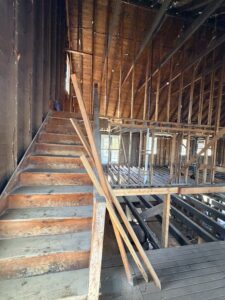
There is already a café operating in the building, open year-round and providing work-readiness training and programming. The larger space has been emptied down to the studs so that the structural condition of the building can be properly addressed.
The eventual project is planned to include a full-service restaurant, culinary training and housing.
The culinary program is envisioned as a three-year experience for chefs and general managers. Participants would train in partner kitchens while the renovation is underway, then gain experience working in multiple restaurants, under different chefs and with different customers. The program will also include a stint with The Open Door, bringing food sustainability and food security into the curriculum.
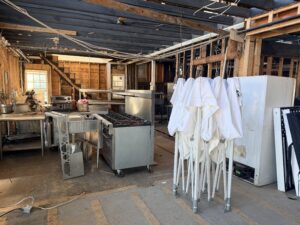
If funding and grants come together as hoped, Cape Ann Works is tentatively targeting February 2027 for the first cohort of chefs and general managers, with the renovated Blacksmith Shop itself hoped to open in summer 2028.
Those dates are targets, not guarantees.
And Brown is refreshingly candid about why.
“It’s a big test of patience,” she said of a project involving historic preservation, structural work, waterfront issues, permitting, funding and an extraordinary number of moving pieces.
Preserving the stories, not just the structure
One of the more interesting aspects of the renovation is that Cape Ann Works isn’t simply trying to make the building look old.
They are trying to preserve the things that make it matter.
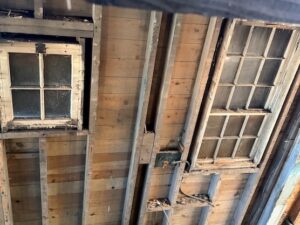
The original forge remains and is planned to become a focal point when visitors enter the building. An old window that had been hidden behind a wall was discovered and is in remarkably good condition.
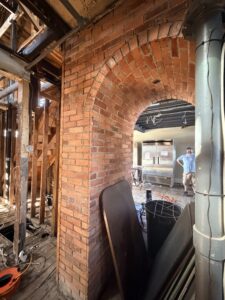
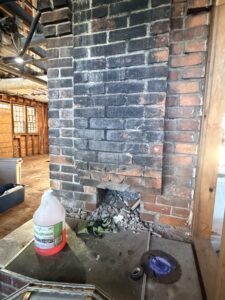
There are plans for a history wall featuring photographs, stories and artifacts from the building’s past.
And Cape Ann Works is actively collecting those stories.
Brown has been in contact with members of the Smith family, including Bob Smith, who still lives in Rockport, as well as descendants in Gloucester. Old photographs have surfaced. Former employees and longtime customers have begun sharing memories.
Some are wonderfully specific.
People remember working there.
People remember eating there.
People remember getting engaged there.
People remember being married there.
That accumulation of memories seems to have changed Brown’s understanding of the building.
“I knew that the building had a lot of importance to a lot of people,” she said. “But until we were here and actually hearing the stories from people, I didn’t truly appreciate just how much this building really means to people.”
That may explain why the renovation isn’t being approached as a blank slate.
The goal is to retain the historic look and feel while giving the building a modern purpose. Cape Ann Works is even looking at ways to involve local artists and students in the project.
And maybe, Anadama bread?
If you know anything about Rockport food history, you may already be wondering about one particular item.
Anadama bread.
The Smith family history connects the bread with its Rockport bakery operation, and it was also served at the Blacksmith Shop. The family eventually operated an Anadama Bread Bakery, and the bread remains one of the more enduring pieces of the Smith family’s local legacy.
So will it return?
Brown isn’t making any promises on behalf of the future chef.
But she certainly hopes so.
“I am hoping, or encouraging the chef to be sure that we have the Anadama bread back again,” she said.
And there is an interesting twist to the future menu.
This won’t necessarily be a restaurant serving exactly the same food it did in 1935 or 1955. Because the kitchen will also be a training environment, the chefs will have a role in developing menus as part of their education.
There will be some staples that remain consistent, Brown said, but the menu is expected to change seasonally — potentially quite frequently — reflecting who is visiting Rockport and what they want to eat at that time of year.
In other words, the Blacksmith Shop won’t be frozen in time.
Nor should it be.
Even the old glass gets another life
Perhaps the most wonderfully Rockport detail in the entire renovation involves something most of us would never think twice about.
Glass.
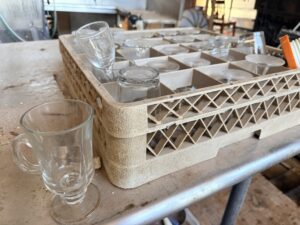
Some of the building’s existing glass and barware is being recycled through Cloud Glassworks, operated by James and Libby McLeod in Essex. The glass will be broken down and transformed into hand-blown pieces that can eventually be used in the restaurant.
It’s an appropriately circular approach to an old building.
Something that has already served one purpose gets another life.
Just like the building itself.
A place to start again
The original Blacksmith Shop restaurant eventually closed after more than four decades. The Smith family sold the restaurant around 1971, and the property later passed through other ownership before ultimately closing in 2011.
Now, more than a decade later, there is a different kind of activity underway.
There are architects, contractors, grant applications, fundraising campaigns, preservation requirements, waterfront considerations and a lot of patience.
But underneath all of that is something much simpler.
Cape Ann Works believes the building can be useful again.
Not simply useful as a restaurant.
Useful as a place where people can learn a trade, find a first opportunity, gain experience, find housing and eventually move on to whatever comes next.
And useful as a place where the community can gather.
That last part may be the most important.
Because when Brown talks about what attracted Cape Ann Works to the Blacksmith Shop, she doesn’t ultimately talk about square footage, construction plans or even the restaurant.
She talks about community.
Melissa and her family created a place where people came together for generations. Cape Ann Works now hopes to do something similar, while giving the building a new reason to exist.
The forge will still be there.
The harbor will still be there.
And, if all goes according to plan, sometime in the not-too-distant future, there will once again be people walking through those doors.
Maybe they’ll come for dinner.
Maybe they’ll come for a cup of coffee.
Maybe they’ll be starting their first job in a kitchen.
Maybe they’ll be carrying a tray of Anadama bread.
And maybe, decades from now, they’ll have a story of their own about the Blacksmith Shop.
Which, in a town like Rockport, may be the best way to restore an old building of all.
NOTICE:
The new Blacksmith Shop Cafe website is now LIVE(!). Share your favorite memories and be part of the revival here:

