
Murder in Rockport: The Unsolved Killings That Haunted a Town
A Saturday on Main Street
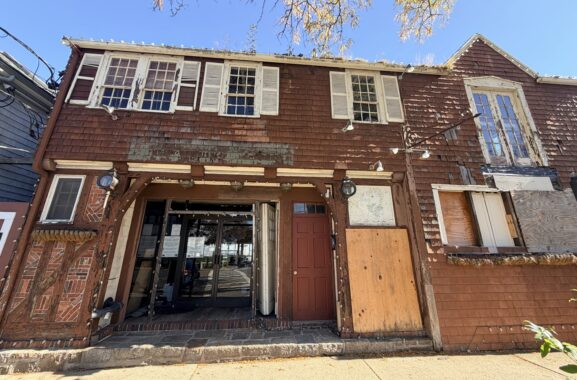
On the morning of May 21, 1932, Arthur Oker opened his tailor shop at 77 Main Street the way he had for years. By lunchtime he was dying behind his own counter, and a town that had gone more than half a century without a murder had one on its hands.
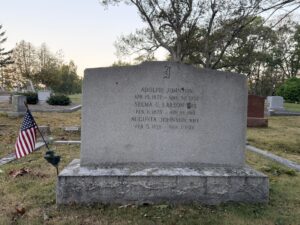
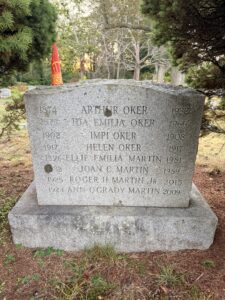
Oker was fifty-seven, a Finnish-born tailor and haberdasher, a father of four, and the president and treasurer of the Swedish Congregational Church. By every account he was an upright, well-liked man. A little over a year later, on Halloween night in 1933, Augusta Johnson, a Swedish immigrant from the same church, was killed in her home. Both victims were beaten with what investigators believed was a hatchet or hammer, tools common in a quarry town.
Neither case was ever solved. In the words of the authors of the book that finally laid the whole story out, they were not so much unsolved as abandoned.
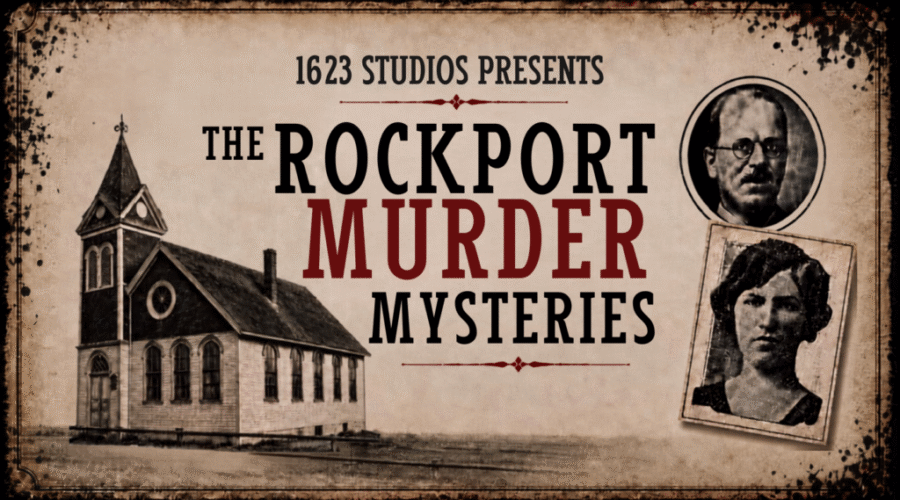
That book, Murder in Rockport, Massachusetts: Terror in a Small Town by Robert Fitzgibbon and Wayne Soini, came out from The History Press in March 2025. Now 1623 Studios, Cape Ann’s community media center, has turned it into a feature-length film for its Timeline: Cape Ann series. It will be screened at the Shalin Liu Performance Center on October 27, just days before the ninety-third anniversary of Augusta Johnson’s death.
Rockport in 1932
Rockport in 1932 was small and shrinking. The Depression and the collapse of the granite industry had left the town struggling, and the Finns, the town’s most recent wave of immigrants, were often treated as outsiders.
Keeping the peace was Chief John E. Sullivan, a man in his seventies who had led the department since 1904 and had just been reappointed for the thirty-second time. He had four full-time officers, and he had never handled a murder.
The Oker Murder
Oker’s last morning, as pieced together in the book, comes down to a few key moments. Around 10 a.m., a young man in a straw hat and brown topcoat was seen in the shop, and witnesses placed a similar stranger there through the late morning. At 12:28 p.m., a police jailkeeper looked in the window and saw Oker at his counter, apparently talking with a man in a straw hat. About seven minutes later, Oker’s son Rudolph unlocked the door and found his father fatally wounded. Oker died in the ambulance.

Witness accounts conflicted on the stranger’s height and coloring, and some described two men, which left investigators without a firm suspect. The core facts that still puzzle:
- Nobody heard a struggle on Main Street on the busiest shopping day of the week, and there was no sign of forced entry.
- Oker’s tailor shears were missing and were believed to be the weapon, though his wounds looked more like those of a hammer or hatchet.
- The safe was open and his wallet gone, but investigators came to see the robbery as a blind.
- A line under the letter D in his appointment book had been erased, leading detectives to wonder whether he wrote down his killer’s name.
Augusta Johnson and the Largest Manhunt
When Augusta Johnson was killed on Halloween night in 1933, fear in Rockport turned to terror. Investigators were convinced the cases were linked, and the Massachusetts State Police launched what was then the largest manhunt in its history. As many as 50 troopers searched nearly every building in town and interviewed roughly 2,500 households. A reward was posted, a self-described mystic volunteered her services, and local children joined the search wearing badges from a breakfast cereal company.
“Basically everybody in Rockport was a suspect,” Fitzgibbon says. Newspapers reached for a Jekyll-and-Hyde killer, and the cases became known as the “Full-Moon” or “Rockport Maniac” murders.

The district attorney added theater of his own: a midnight service at the church where a preacher-turned-state-trooper warned the congregation that the killer might be among them and might be “next.” Fitzgibbon wonders whether it was strategy or show, though he notes it did turn up some leads.
Where Did the Files Go?
The single biggest obstacle for anyone trying to solve or retell this case is that the paperwork is gone. No Rockport police files survive.
According to the authors, in 1944 Chief Sullivan was forced into retirement at age 84. While cleaning out the police station, he is said to have thrown a trove of old records, including the Oker and Johnson case files, into a quarry. The state police retained only a very small amount of official correspondence.
There is no evidence in the sources for this article that the files were destroyed to hide anything, and the authors do not claim there was. But the loss is part of why so many questions remain, and it is not the only thing that raises them:
- A compromised crime scene. Members of the public wandered into Oker’s shop while he lay dying, and a selectman later accused Chief Sullivan in print of failing to protect the scene. State police reportedly considered the evidence tainted from the start.
- Two agencies not on the same page. Fitzgibbon says the friction between the local and state police hampered the investigation from the very beginning.
- A silence that lasted generations. For decades, locals insisted they knew who the killer was but would not say the name when pressed.
Wayne Soini adds a “what if” of his own. The nearest way out of Cape Ann was a single road and a single bridge in Gloucester. Because Oker was still alive when police were first alerted, a quick call from Chief Sullivan to his Gloucester counterpart, and a roadblock at the bridge, might have caught the killer with the weapon or the loot. In an era before search warrants were a major consideration, he notes, nobody would have blinked at searching cars.
The Whispers, and the Names Nobody Will Say
This is the part of the story that makes the case feel alive. Soini says four or five people have privately given him names over the years, always on condition that he never say who told him. The names matched ones already circulating in Fitzgibbon’s earlier research, and each person was certain it was one of four individuals.
The authors do not agree on who did it, and they have declined to name anyone in print.
Fitzgibbon asks readers to consider a different possibility: that there may have been two perpetrators, and that they may have been related. He says Augusta Johnson’s killing looked like the silencing of someone who knew too much, and that the book contains enough clues for readers to work out a possible scenario.
One Disputed Clue
A story surfaced at a presentation the authors gave at the Lanesville Community Center. A woman in the audience said her family had bought the house the Oker family once lived in, and that during a small remodel a pair of shears turned up in the ceiling. The family, she said, took the find to the police station, where it went no further. By then roughly four decades had passed and the case files were long gone.
Given that Oker’s shears were the missing piece of the case, it is a startling story. It is also, importantly, unverified. When the documentary’s producer asked around, some Rockporters dismissed the tale as invented by a family eager to be part of the story. He left it out of the film.
How the Book Got Written
The book began with an unlikely seed. Wayne Soini is a Cape Ann native and retired labor lawyer who had long wondered about the murder of the Finnish tailor. When a local Finnish-American organization was looking for someone to present a program on the case, he volunteered. Someone pointed him to Rob Fitzgibbon of Essex, a software professional and local historian who had already written up a great deal of research on his blog, Chebacco Parish. Soini read it, thought it was half a book already, and asked for permission to use it. Fitzgibbon agreed immediately and the two decided to collaborate.
They pitched the project to The History Press and got a contract. The manuscript took about a year and a half from first curiosity to completion, helped by the head start of Fitzgibbon’s earlier work. They reviewed some 200 newspapers, from the Boston dailies to the Gloucester Daily Times. They dug through the few surviving state police records and combed through material at Rockport Town Hall. They tracked down the Swedish Congregational Church’s records through North Park University, which turned out to be handwritten in cursive Swedish, so they hired a translator. They spoke with relatives of the victims, locals and descendants. Then they traded the manuscript back and forth until it was done.

The human side surprised them. Soini says they learned a lot about family trauma, and how a murder reverberates through descendants for generations. Both authors say family members of both victims have been supportive and have helped.
Both men are busy with other projects. Soini, whose earlier books include one on Gloucester’s famous sea serpent, has a new book, The Girl in the Salt Shed, a biography of a woman who self-emancipated and was later the subject of an 1841 case argued by Abraham Lincoln. It is available now. His book on Gloucester and the War of 1898 has been pushed to next year. Fitzgibbon, who also wrote a book on the 1941 murder of Frances Cochran in Salem, is a vice president of the 1623 Studios board.
Making the Film
Timeline: Cape Ann started out small. Kory Curcuru, a producer at 1623 Studios, began it as one-minute social media snippets of local facts, and over time the pieces grew to three, five, ten and twenty minutes. A story about Howard Blackburn was the first one he had time to tell in full. A short film on the Essex Body Snatcher, which he made with Rob Fitzgibbon, got the two collaborating. When Fitzgibbon and Soini’s book was in the works, Kory asked if he could take it on.
He is, by his own description, a one-man show. He adapts the script, edits, researches, and records the voiceover himself, and he deliberately uses basic editing tools because the series is public-access content that others should be able to pick up. The film runs about 90 minutes and uses roughly 400 images.
The challenge is the same one the authors faced, but visual. The case has few photographs and no police files, and Kory says he found nothing from the Rockport police department before 1939. He worked with the Cape Ann Museum, the Sawyer Free Library, Sandy Bay Historical Society and other local museums and libraries. After the first part was released, the families of both victims contacted him with more photos, and that changed the story he was telling.
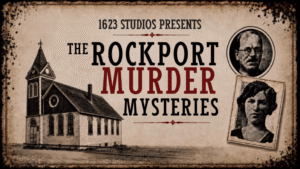
It also changed the structure. Part one ended on a cliffhanger. The film showing at the Shalin Liu will join part one, with tweaks, to part two as one feature. Because it is made for a theater, he says, he cut it more cinematically, with an eye toward people in the balcony who do not want to look at the same postcard over and over. There are no interviews on camera. The film is built from archival images and documents.
There is a delicate balance as well. Kory says he wanted the film to be as thorough as possible without giving away everything, because he wants people to buy the book. He deliberately left out some small details and Easter eggs for readers to discover. And he says the viewers he worries about most are the Cape Ann history buffs who have seen every postcard nine hundred times.
Part one drew a lot of views online, and a lot of commenters demanding to know where part two was.
Why Tell It Now
Emily Games, Executive Director of 1623 Studios, stresses that the series is about sharing local history, not glorifying violence: two people were killed, the subject is not light, and the goal is to tell what happened and let viewers reflect. The film does not claim to solve the case, she notes. both she and Kory say unresolved endings are part of what makes true-crime documentaries compelling.
Kory sees the film as a living document. If a family finds a letter or a photograph, he says, the film can be updated and re-released. He suspects there will be another revision at some point in the future, and that someone, somewhere, may yet say the name aloud.
What’s Better…The Book or The Movie?
We couldn’t resist asking the classic question of the authors and the people behind the documentary: which is better, the book or the movie? It was asked jokingly, and nobody was eager to crown a winner.
The authors acknowledged they haven’t yet seen the second part of the documentary, but they did agree that seeing the story told visually adds an appeal of its own. Emily Games, a self-described visual person, said she’d lean toward the film, while adding that people will have to come on October 27 to judge for themselves.
All parties were humble and gracious about their peers’ work, and each described the project as a joint effort.
If You Go
Murder in Rockport: Screening and Conversation
- When: October 27. Doors at 5:30 p.m., screening at 6:30 p.m.
- Where: Shalin Liu Performance Center, Rockport. The Shalin Liu is hosting the event as a venue, and 1623 Studios is presenting it.
- After the film: A conversation moderated by the producer with authors Rob Fitzgibbon and Wayne Soini. Organizers welcome audience members to share what they know or what their families remember about the case. Several relatives of the victims are expected to attend.
- Afterward: The film will be released publicly on 1623 Studios’ YouTube channel and on Channel 6.
The book, Murder in Rockport, Massachusetts: Terror in a Small Town, is available from The History Press and local booksellers.