
History of Rockport (Abridged)
Note: This is an abbreviated version of the history of Rockport, MA. Over upcoming posts we will start to take a deeper dive for those hard core history buffs.
Rockport is a quaint New England town located in Cape Ann, whose story moves from 17th‑century fishing and 19th‑century granite quarrying to a celebrated artists’ colony and modern tourist magnet.
Early roots and industrial turn
Richard Tarr is recognized as the first settler in the Sandy Bay area in 1690. During this time, Rockport was initially a part of Gloucester’s early colonial settlement before it was set off as its own town in 1840. The town’s identity around this time coalesced around fishing, shipbuilding, and later stone cutting.
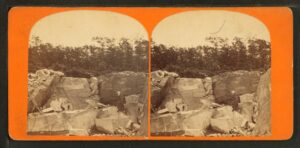
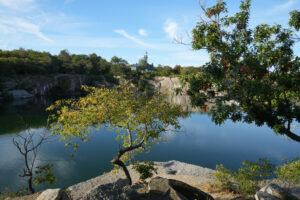
During the 19th century granite quarrying became Rockport’s dominant industry, with stone from local quarries—most notably the Babson Farm quarry —shipped across the eastern United States. The quarrying era reshaped the coastline and workforce, and left the dramatic ledges that visitors may now explore at Halibut Point State Park. Further evidences may still be seen around Granite Street Bridge, where from atop the 1872 stone arch bridge viewers can see remnants of the now water filled quarries.
From working harbor to art colony
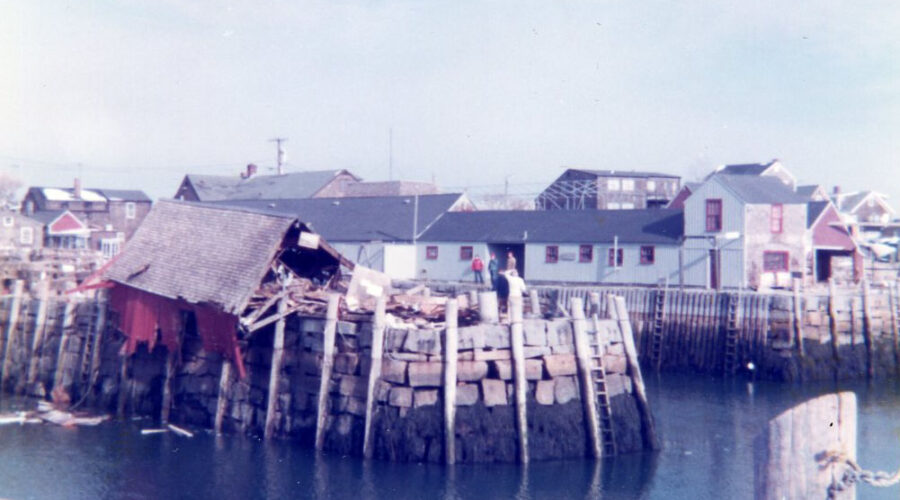
Fishing remained central even as quarries grew. The unassuming red shack on Bradley Wharf—Motif No. 1—became an artists’ favorite and a symbol of Rockport’s identity. Motif No. 1 is often referenced as the most painted building in United States and it’s image has become synonymous with the town. The original structure was built in 1884 as a fishing shack. This structure was unfortunately destroyed as part of the Blizzard of 1978 with winds around 100 miles per hour in the area. An exact replica was built later that same year to replace the structure, and is the version that still stands today.
Bearskin Neck, a narrow peninsula at the heart of Rockport, has long served as the center for the fishing industry (initially) and artistic community (later on and still currently). It’s name derives from the tale of a local named Ebenezer Babson who was said to have killed a bear with only his knife in hand. After the fight, Ebenezer presented the bear skin to locals in this location and fisherman subsequently dubbed the area Bearskin Neck. Nowadays, this area is the thriving center of Rockport with countless charming shops, restaurants and artist galleries.
Temperance, “dry” years, and recent change
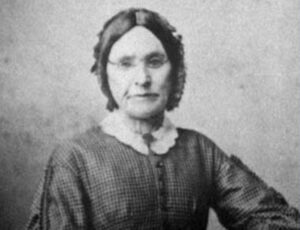
In 1856, Rockport’s long relationship with temperance reached a dramatic peak when Hannah Jumper led a group of local women in the now‑famous “hatchet” raids that smashed barrels and spilled hundreds of gallons of liquor, an act that effectively ushered in a century‑and‑a‑half of local prohibition. After a brief, year‑long interruption in the 1930s, the town remained essentially dry for decades as temperance sentiment and local ordinances limited commercial alcohol sales. That long dry era began to change in the 21st century when Rockport voters approved a 2005 local option allowing inns, hotels, and restaurants to serve alcoholic beverages with meals, and subsequent licensing decisions have gradually relaxed restrictions on retail and on‑premise sales. In 2019, Rockport moved further away from its dry‑town identity when the town permitted package sales (beer and wine) and a local grocery store was granted a liquor license to sell beer and wine. This development ended the practical legacy of the 1856 ban for retail alcohol sales. In 2025, Rockport further loosened restrictions via the opening of a brewery and taste room.
Visitors, attractions, and cultural life
Top attractions within Rockport include Halibut Point State Park (hiking trails), Bearskin Neck (shopping and restaurants), Front (sandy) and Back (rocky) beaches, and Shalin Liu Performance Center (with amazing harbor views serving as the backdrop of performing artists). Rockport’s galleries, festivals (including Motif No. 1 Day), and coastal trails make it a concentrated cultural destination. The town draws tens of thousands of day‑trippers and seasonal visitors, with peak crowds on summer weekends.