
Five for Fighting’s John Ondrasik on Rockport, “100 Years,” Following Your Gut—and Why He Still Has Another Record in Him
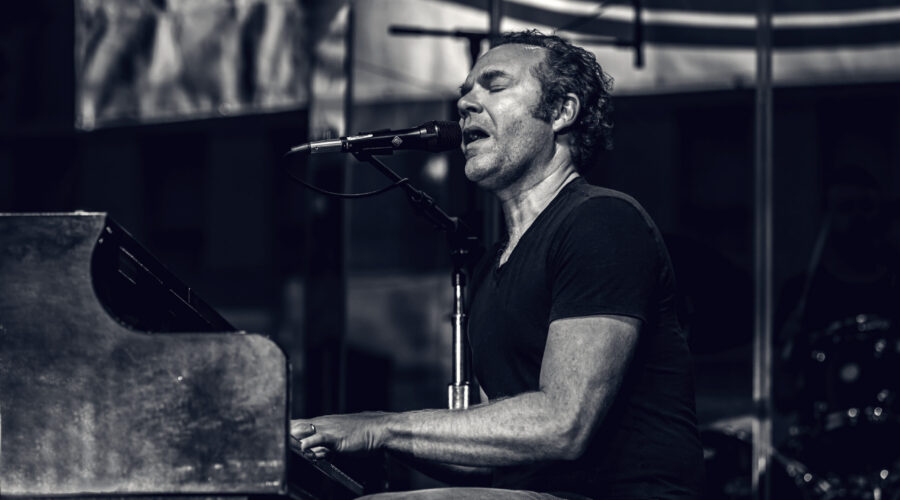
(Cover image credited to Nikolai Puc Photography)
When John Ondrasik arrives in Rockport this October, he won’t just be bringing the songs that have made Five for Fighting a household name. He’ll be bringing a string quartet, his daughter and her band (Lace and Lee), and—if his plans hold up—a search for lobster rolls.
Ondrasik, the singer-songwriter behind Five for Fighting, is best known for piano-driven hits including “Superman (It’s Not Easy),” “100 Years” and “The Riddle.” “Superman” earned him a Grammy nomination and became an especially poignant song following his performance at the 2001 Concert for New York City at Madison Square Garden.
But there’s considerably more to Ondrasik than the songs that dominated radio in the early 2000s. He’s continued to write music inspired by world events, including his 2024 song “OK (We Are Not OK)”, written in response to the October 7 attack on Israel and the rise in antisemitism. He’s also performed in Ukraine with the Ukrainian Orchestra and has continued balancing music with his role in his family’s manufacturing business.

Ahead of his October 3 performance at the Shalin Liu Performance Center, Rockport MA Guide caught up with Ondrasik to talk about discovering Rockport, preferences of ice cream or coffee, the evolving meaning of “100 Years,” his unlikely second career, speaking out despite criticism, and his expectations for a Los Angeles Kings playoff run.
Discovering Rockport
Rockport MA Guide: You’re playing the Shalin Liu Performance Center, which is a pretty intimate room in a town with a long history of attracting artists. You’ve played much larger venues and some pretty iconic stages over your career. What’s different about performing in a place like Shalin Liu, and does the setting or artistic character of a town like Rockport become part of the experience?
John Ondrasik: One of the blessings of my career is that I get to see America in ways very few people do.
One of my favorite things is coming to small-town America, particularly the coastal towns. Whenever we set up a tour, I hop around on the internet looking for artsy coastal towns. There’s nothing like it, especially in the fall with the leaves changing.
That’s actually part of why we started doing the string quartet. I had been doing symphony shows, which were such a great experience, and they allowed me to pull songs from my catalog that I wouldn’t necessarily play with a rock band.

We have these great arrangements from various composers, but I’m obviously not carrying an orchestra around with me. So we reduced it to a string quartet and started taking the show to smaller venues and smaller towns that don’t have an orchestra.
We’ve been doing it for about 15 years now, and these venues are perfect for it. They’re very intimate. You can see the musicians right in front of you, and these players are all world-class Broadway musicians.
They alone are worth the price of admission.
And to put a cherry on top, my daughter is opening for me with her band, Lace and Lee. The whole family is coming.
Rockport MA Guide: So you’re bringing the whole family to Rockport?
Ondrasik: Yeah. The only problem is that when I bring my wife and she comes to town like yours—she doesn’t want to leave.
Rockport MA Guide: A lot of people do that here. It becomes a second home.
Ondrasik: Oh, yeah.
Seeing America 24 Hours at a Time
Ondrasik has spent decades traveling the country, but touring doesn’t exactly leave a musician with unlimited time to play tourist.
Rockport MA Guide: When you arrive somewhere you’ve never been before, what do you notice first—the landscape, the people, the food, the architecture? What are you hoping to discover about Rockport?
Ondrasik: All of the above.
Certainly the beach towns have a different kind of vibe. Our cello player, Peter, is a sailor, so he’s always looking at where he can charter a sailboat.
Of course, we’re always looking for the cuisine. For me, I always find the local ice cream place while everyone else is looking for coffee.
It’s fun to walk through the main streets and meet the folks. Small-town America is different. People tend to be a little more interested, kinder, friendlier. You learn as much as you can about the town.
Unfortunately, the way we move, we’re usually in a town for 24 hours. We only have the afternoon. But we do as much as we can to immerse ourselves in the culture.
After the shows, we’ll go to the merch booth and talk to the fans and chat with folks.
I wish everybody could see our country the way we do.
Rockport MA Guide: Well, you’re going to have a few things to explore while you’re here.
Ondrasik: I’m looking forward to it.
The Important Question: Lobster
Naturally, no interview with a musician coming to Rockport from Los Angeles would be complete without addressing the town’s most important culinary requirement.
Rockport MA Guide: Have you had New England lobster before? And if you haven’t, are you planning to rectify that while you’re here?
Ondrasik: I have.
I’ve spent some time at Martha’s Vineyard, and certainly Boston is one of our biggest markets. We’re always coming to you there.
I have lobster rolls on my list. We’ll be knocking those out.
We like to go down to the coast, get them right off the boat, watch the boat come in, sit there on the dock. Do it the right way.
That’s just another thing that everybody’s looking forward to.
Rockport MA Guide: Roy Moore is that kind of the quintessential place. You’ll find a line wrapped around the place just trying to get in.
Ondrasik: Putting that in our tour notes right now.
Consider that recommendation officially made.
Trusting Your Gut
Ondrasik’s career has included more than a few moments when conventional wisdom pointed in one direction and his instincts pointed somewhere else.
“Superman (It’s Not Easy)” almost didn’t make the album. And when his song “Chances” was being considered for The Blind Side, he chose the relatively unknown movie over another project that his advisors expected to become a blockbuster.
The smaller movie, of course, turned out to be the much bigger hit.

Rockport MA Guide: Has following your gut become easier with experience, or do you still tend to second-guess yourself?
Ondrasik: Certainly easier. On the backside of your career, the consequences aren’t as great.
You learn the hard way about going against your gut. I say this in my keynotes: if you trust your gut and it goes wrong, look, we fail. That’s part of life. You sleep well.
But if you make a decision that really goes against the grain and it doesn’t work out, those are the ones you carry with you.
“Superman” is a good example. I was following the lead of my producer, Gregg Wattenberg, who basically said, “Dude, you have to put that song on your record.”
Thank goodness we did.
I probably would have come around to it eventually. I just fancied myself as a rocker back in the day.
I’ve also had great advisors around me. My wife was in the music business for 20 years, and I have some really good friends who give me different opinions.
But at the end of the day, it’s rock and roll. It’s about life and death.
And so far, things have worked out pretty well—even with the mistakes.
Twenty Years Later, “100 Years” Keeps Changing
Few songs age quite as literally as “100 Years.”
Written more than two decades ago, the song moves through different stages of life, and Ondrasik says he’s now living through some of the same verses he once imagined.
Rockport MA Guide: After singing “100 Years” for more than 20 years, does it hit you differently now than when you first wrote it?
Ondrasik: I kind of joke that I wrote it at the top of the second verse—“family on my mind”—and then I went through the midlife crisis verse. And I was right about that.
And now I’m in the bridge, which is the part where I’m supposed to be wise.
Suddenly you’re wise, right?
So I hope I’m a little wiser and a little smarter. I hope I don’t have all the answers.
But that’s the really fun thing about that song. You kind of age with it, and it seems relevant wherever you are.
If I’m fortunate enough to be able to sing it at 100 and beat the song, well, good for me.
I always love people who come up and say, “My grandfather just turned 100,” and I’m like, “You win.”
It’s also nice that the song has found a new audience with young people who weren’t even around when I wrote it. It’s found its place in the culture. You still hear it at graduations, weddings, funerals and all those kinds of things.
The Other Five for Fighting: Life in the Family Business
For all his success as a musician, Ondrasik has maintained a second career that most fans probably know little about.
He’s worked in his family’s manufacturing business since he was a teenager, and today the third-generation company employs hundreds of people.
Rockport MA Guide: Is there anything about you that you probably wouldn’t have learned if you’d spent your entire life in the music business?
Ondrasik: I think it certainly grounded me.
When you have to make a payroll, when you go out and sweat and make things—and as a young kid, I was out there on the line working—you understand the real world.
Sometimes celebrity culture can be a little shallow. I’m not trying to insult my friends because I’ve had my shallow moments, but this is the real world.
Wherever I was in my career, I’d come back here. You go out there, hear the noise, see the sparks. It’s sweaty and people are making stuff.
But you also see the American dream every day.
We have people who start at a young age, sometimes at minimum wage, and now their kids are going to Ivy League schools. That’s the beauty of a small family business.
And I get to work with my dad, who’s 88. He’s here right now. He pushes the button and the Tesla drives him to work every day. He’s here 24/7.
My son Johnny is running our Texas facility.
So it’s a very special time that the three of us are here working together.
I think it’s also taken some pressure off the music side because I had some financial security. If a song didn’t go all the way, it was disappointing, but I could still pay the rent.
I think it’s reflected in my music because I’ve had a different life experience than many artists.
Still the Insecure Guy Writing Songs
Perhaps the most surprising thing about a career spanning decades, millions of records and some of the most recognizable songs of the early 2000s is that Ondrasik doesn’t sound particularly interested in declaring himself finished.
Rockport MA Guide: Looking back, what has surprised you most about the person you’ve become since you first started making music?
Ondrasik: Certainly the fact that 25 years later, these songs still seem to resonate in ways I never could have imagined—particularly “Superman.”
We’re coming up on the 25th anniversary of 9/11, and I’ll be going to New York and doing events recognizing the heroes of that day.
“Superman” has also become a song that’s important to the Jewish community because I’ve done a lot of work with the hostages with that song.
If you’d told me 25 years ago that I’d have songs still finding their way into meaningful cultural moments, I would have said, “Wow, that’s crazy.”
But I’m still the insecure dude trying to write his best song.
I like to think my best song is ahead of me.
I still have all those insecurities, but I also have a certain freedom I had as a young songwriter, when I was just writing because I loved to do it. If I was angry, I wrote. If I wanted to express myself, I wrote.
I’ve kind of come full circle to that.
I don’t have to write a record because I have a deadline. I can just write what I want to.
In a weird way, I’m back to where I started.
Speaking Up When It’s Uncomfortable
In recent years, Ondrasik has increasingly used his music and public platform to address world events and issues he believes deserve attention. His songs have addressed Afghanistan, Ukraine and the October 7 attack on Israel, including “OK (We Are Not OK).”
He has also recently defended Boy George after the singer faced backlash for releasing “We Will Dance Again,” a song expressing solidarity with Jewish friends and victims of the October 7 attacks. Ondrasik wrote about the controversy in a recent Washington Post opinion piece.
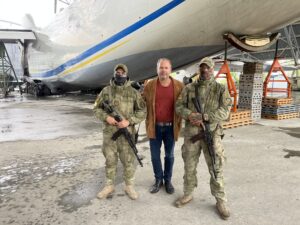
Rockport MA Guide: You’ve been increasingly outspoken in your support of the Jewish community and have publicly supported Boy George when he faced criticism. You’ve also faced backlash yourself. As an artist, how do you navigate speaking out when you know there may be a personal or professional cost?
Ondrasik: I’m at a stage in my career where perhaps the cost to my career is not catastrophic.
I’m not going to get dropped from a record company because I don’t have one, and I’ve already had some hits. But I’d like to think that 25 years ago I would still have been writing about Ukraine and Afghanistan and Jewish people and freedom and human rights and all this stuff.
I don’t know if I would have thought twice, just because I was a young songwriter and a young musician.
I have a lot of friends in Hollywood who, if they spoke their views, might not have a job or be able to pay their rent or mortgage. That’s real, and I think that’s unacceptable.
The arts like to pride themselves on the idea that you’re probably not doing anything worthwhile if you’re not pushing boundaries. So I’m kind of used to the pushback.
And I get heat from all sides—from the left and from the right.
I think part of a songwriter’s legacy is speaking what they believe.
You listen to the songs of the ’60s, you listen to the music of today, and you get a sense of the times—and the silence. In my mind, the moral cowardice also tells you something about the times.
Do I like having to hire extra security for my shows? No.
Is it crazy that we’re in a world where I have to do that? Yes.
Is it going to shut me up? No.
Five for Fighting Isn’t Finished Yet
Ondrasik hasn’t released a traditional Five for Fighting studio album since Bookmarks in 2013, instead releasing singles and projects, many of them connected to current events. But he says another album is still coming.
Rockport MA Guide: Has the way you want to make and release music changed? Or does the album simply not feel like the most important way to tell a story anymore?
Ondrasik: I still love albums. It’s my plan to put out another one.
It just takes a lot of time, and I have so many other obligations—music and non-music.
Being in the studio with my daughter has actually rekindled that spark of how fun it is.
Most of my recent songs have been about world events. I’ve just demoed a song that isn’t about a world event, and I want to get back to writing songs simply for the sake of the song.
I really do plan on having another Five for Fighting record.
I love records. I’m not interested in just putting out a single, then another single, then another single unless they’re related to timely events.
It may take a while, but Bookmarks will not be the last Five for Fighting record.
Rockport MA Guide: Can we at least get the working title of the new song?
Ondrasik: It’s called “Let’s Do It Again.”
And there you have it. The next chapter may already have a title.
The Performance That Changed Everything
“Superman” became an enduring part of the cultural memory surrounding September 11 after Ondrasik performed it at the 2001 Concert for New York City alongside artists including Paul McCartney, Elton John and Billy Joel.
But what happened onstage wasn’t quite what the television audience saw.
Rockport MA Guide: When you look back at that performance now, what do you remember that the audience never got to see?
Ondrasik: We were having technical problems.
When I hit the first chord of “Superman,” I had 100 decibels of white noise in each ear. I couldn’t hear my performance.
And I look back at that as the biggest—or best—performance I’ll ever do. Not necessarily because it sounds the best, but because of the pressure and the fact that I couldn’t hear anything.

I was a young kid who was just getting used to hearing a song on the radio, and suddenly I’m surrounded by every living icon.
So I look at that as my best performance and most significant one.
Though I have to say, the last few years—performing at Hostage Square in Israel and performing on the Nimitz with Elon Musk at Freedom 250—those have been pretty amazing, too.
But the thing I remember most about the Concert for New York wasn’t actually my performance. It was watching The Who blow the roof off Madison Square Garden.
People forget that the audience for that concert included people who had been down at Ground Zero since 9/11, wading through rubble. They hadn’t had a chance to release anything.
When The Who performed, I looked into the crowd and people were crying and singing and holding each other.
It was cathartic—not just for those people, but for the nation.
That lesson has stuck with me throughout my career.
Maybe that’s why I’ve been a little untraditional in some of the things I do.
And Now, the Question That Really Matters: The Kings
We couldn’t let a Five for Fighting interview end without addressing the hockey team that inspired the name.
Rockport MA Guide: Both your beloved L.A. Kings and my Dallas Stars have been absolutely slaughtered in the press for supposedly disastrous off-seasons. Both teams have pretty high expectations. Putting aside the pessimism for a second, where are the Kings going to finish?
Ondrasik: Behind the Stars.
I think the Kings will be a bubble playoff team. With (Artemi) Panarin, they probably have just enough talent to sneak into the playoffs, even though the division has gotten much better with the Ducks and everything.
The Stars, as long as they have Robertson, I think are contenders.
It’s a tough division. I thought the Avalanche were just going to roll through the Cup last year, and it didn’t happen.
As a fan, you can’t expect your team to win the Stanley Cup every year, but you hope they’re a contender.
I don’t think the Kings are contenders for the Cup.
I think the Stars are.
But it should be an interesting year for the Kings. It’s a huge transition—a new coach, a new GM. (Anze) Kopitar’s gone, Drew’s (Doughty) the last kind of person from the golden age.
So I’m cautiously optimistic that we’ll win some games.
We’re younger.
But, yeah, I think we’re a bubble team.
And if we slip in, then we’ll face one of the best teams. And we’ve seen how that goes the last six or seven years.
Rockport MA Guide: We just have to hope neither of our teams wins the Presidents’ Trophy, because that seems to be the kiss of death.
Ondrasik: The Kings will not. Don’t worry about that.
Five for Fighting performs with a string quartet at the Shalin Liu Performance Center on October 3. Ondrasik will be joined by his daughter and her band, Lace and Lee, who will open the show.
Check out Lace and Lee’s new EP coming out November 27, 2026. Their latest single, “Dream” is currently out now.