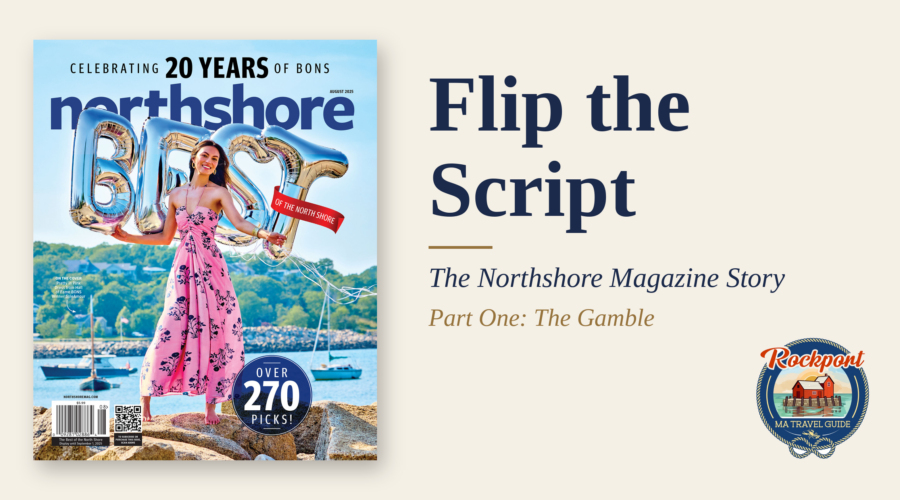
Flip The Script – Part 1 (The Gamble)
Two publications spend their days telling everyone else’s stories. Over the upcoming two part series, we asked them to tell their own.
Every month, editors at a regional magazine decide which restaurant gets the spread, which painter gets the profile and which small-town shop finally gets noticed. The people making those decisions are rarely the subject. So we turned the tables. Over several weeks we interviewed five members of the Northshore magazine team, a glossy regional lifestyle title covering the North of Boston, and the co-founder of New England Travel Journal, an independent online travel guide started by two childhood friends.
Part One covers how a moving-company owner started a luxury magazine for the North Shore, the early gambles and failures, and how an awards program that began with a handful of ballots became one of the region’s biggest nights out. Part Two goes inside the machine: how an issue gets made, who does what, and what a very different kind of publication, built on a laptop and a friendship, is trying to do.
Part One: The Gamble
The mover who became a publisher
Rick Sedler’s first career was moving other people’s furniture. He ran a moving company at 20 with a friend, and he says it took him a while to see what he was really good at. “We move everyone’s stuff,” he remembers telling his partner, but what the two were really doing was earning trust from strangers and getting them to say yes. That was sales. It was also hard on his back.
His sister-in-law worked in the art department at Robb Report, the luxury magazine, and she thought he would fit in with the sales team. The publisher told him he needed closers, not movers. Rick offered a deal: work for two weeks, unpaid, and let the results decide. “I’ll work for two weeks. You pay me nothing.” The publisher’s reply, as Rick tells it: “You just closed me. When can you start?”
He stayed 17 years. Along the way he cold-called owners of exotic cars, custom coaches and private aircraft to sell them ad space. He estimates he spoke with about 10,000 millionaires, and once, he says, with Evel Knievel, who was selling a motor home. His pitch beat the competition on one point: a $6 classified ad in the newspaper, or a $560 program in a four-color magazine whose readers were the buyers. When Robb Report changed hands, he moved to Elite Traveler magazine, helped build it, and then finally started his own company.
A Celtics basketball and a gap in the market
His first business was a firm that supplied remote ad salespeople to publications, a plan that worked until it didn’t. Start-ups paid slowly, and clients came and went. He wanted to own something so that, in his words, “I have only myself to blame.”
The idea for a North Shore magazine, he says, arrived by accident. At a client’s fundraiser, someone talked him into putting his name on an auction item. It was a Celtics basketball signed by the players, and he won it for $2,500 he didn’t have. The photo of Rick standing among the players ran in Boston magazine, and the other parents at his son’s baseball game on the North Shore told him they had seen it. His question was why people up here were reading Boston magazine at all. Around the same time he was working on a regional magazine for a private island community on the Georgia coast, where everyone wanted to reach the residents because the magazine was mailed to every home.
Put those together and the concept was a regional magazine with Robb Report production values: oversized, beautiful, mailed to affluent households, and designed so people were proud of where they lived. “Someone told me they ship it to their parents and say, ‘Mom, now you know why I live here,'” he says. Newspapers had tried to publish North Shore magazines, he adds, but a newspaper trying to make a magazine never worked.
Buying a name, and a rival
Then came a surprise. Someone from Rockport told him that a magazine called North Shore already existed. Rick had never seen it. He called the owner and asked whether he would sell. The owner would, on terms: Rick paid quarterly, and if he missed a payment he would lose the magazine. The first issue earned enough to pay the people who worked on it and make the first quarterly payment.
The first cover, Rick recalls, featured a Rockport restaurant, My Place By-the-Sea.
Getting the magazine to readers was harder. Rick carried copies into shops across the region and kept hearing the same thing. Some owners pointed at their no-solicitation signs and told him they did not want to hear whatever he was about to say. One day he had his son Cody, then about four, with him. The idea he came up with, in the spirit of the Grinch, was to send the boy in. Cody walked into a shop in Newburyport, got his head rubbed, took a magazine and ran back out for another. “He distributed in that way,” Rick says. “The very first issue in Newburyport, one shop after another.”
There was a competitor too. The man who had been running the old magazine for its former owner left and started a rival called North Shore Life. Rick says advertisers sometimes could not tell which publication they were dealing with.
From advertorial to editorial
The bigger challenge was the model. The old magazine had been, in Rick’s words, a “pay for play” publication: advertisers got a write-up wrapped around their ad. He wanted something readers would trust, which meant calling back the previous owner’s advertisers and telling them the magazine was changing. He asked for a bigger commitment and promised a larger audience in return.
It was a hard sell. Some left and some stayed. One advertiser that appeared on the cover of the sample copy he bought has been in every issue since, a stretch of more than 20 years. “That’s the epitome of community trust,” Rick says.
The format was a gamble too. The magazine went oversized, and people told him it was too risky. If he failed to sell enough ads, he says, the first issue would have cost him about $60,000 out of pocket, to be mailed to roughly 21,000 homes anyway. His rule for risk: “If you don’t absolutely believe it will be a success, don’t try it.”
Once the magazine looked the part, the pieces fell into place. Photographers who lived on the North Shore, and were drawn by the quality of the paper and printing, reached out and asked to work on it. Rick and the team also made a rule to avoid politics and controversy and stick to supporting the community. “I wanted people to know that I wanted to support their business first and foremost,” he says, “and not just collect money from you.”
Best of North Shore: from a dozen ballots to 150,000 votes
The magazine’s best-known project is probably the Best of North Shore Awards, known as BONS. This past August the program held its 21st annual event. It did not start out grand.
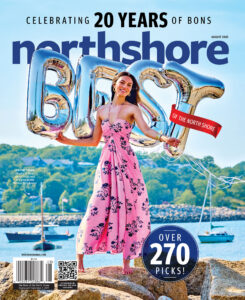
Melissa Gillespie, the magazine’s community relations director, has been around since nearly the beginning. She remembers a program built on paper ballots and almost no recognition. “It was tiny. It was a vision. It was a dream.” At first, businesses wondered what BONS even was. Nancy Berry, the editor, who joined about 14 or 15 years ago, says she was told that early ballots had only about a dozen entries.
Rick has a favorite BONS story. In the early years, he says, results day could be rough. Advertisers who lost threatened to cancel, and one of his early editors was in tears in her office. His advice to her: be ready to explain why you picked a winner, and stand behind it.
That tension, whether the winners are just advertisers, has never fully gone away. Rick says the numbers disagree. Rick says that when the magazine used AI to compare the winners list against its advertiser list this year, most winners had never advertised.
The awards also grew in the pages of the magazine. When Nancy became editor, she suggested devoting the whole August issue to it, front to back, with every winner written up. Today, more than 150,000 votes are cast. This year, for the first time in 20 years editor’s choice no longer mirrored readers’ choice, which made room for winners like Rockport’s Emerson Inn, honored as a best sunrise spot.
The party grew as well. Events manager Laura McQuiston says BONS draws about 1,400 people and always sells out. More than 40 restaurants and bars take part, and no chains are allowed. It has rained every year she has worked there, she says, which means a fresh floor plan every August. “There are plans for a rain plan,” she jokes.
For Rick, the best part is what happens next. “When people get a copy of the magazine and they’re in it,” he says, “they’re so excited.” For Melissa, it is walking into a restaurant and seeing the plaques lined up on the wall. “We built this,” she says.
Building a media company, not a magazine company
BONS is also an example of the biggest change to the business. Early on, Rick says, people warned him that a magazine on its own was a risky thing to own. A venture capital adviser told him that a magazine that only prints is worth little to a buyer, and one with events, a newsletter, social media and digital products is worth far more. “Build a media company, not a magazine company,” is how Rick remembers the advice.
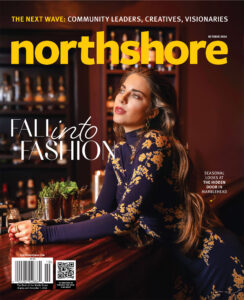
The warning was hard to act on when print was going well. A friend likened it to “planting your crops in July”—by the time you need them it’s too late. The hardest part, Rick says, was finding salespeople who could sell all the new products and retraining the ones who did not see why it was necessary.
Today, in Rick’s telling, the business is a four-legged table, not a center pole: print, digital editions, social media and video, and events. Melissa says the Friday newsletter, running for many years, reaches about 80,000 people. Laura’s events calendar includes seven to ten flagship events a year, from BONS in August to a golf tournament in June (132 golfers, with part of the proceeds going to charity) and a beauty and wellness event in March tied to the Top Doctors issue.
Some of the challenges are still there. Rick has seen a shift in local ad dollars to social media: small businesses, he says, tell him they handle their own social and then hand their budget to a trillion-dollar company instead of the local magazine providing more direct support. He also keeps a long-running policy of putting a wall between editorial and sales, and notes that the circulation model is still in flux too. The magazine started as a controlled circulation product mailed free to a targeted list of affluent households, and Rick says it is moving toward more paid readers. The exclusivity, he laughs, had its own side effects, including calls from people demanding to be added to the list.
His pitch to advertisers is one sentence: “Every time you place an ad, you help support the local community.”
Making the Magazine
A magazine’s history explains why it exists, but not how it actually gets made. Part Two goes inside the issue: how a small team turns a story idea into a printed page, who handles each step from assignment to press proof, and how an events department plans a night for 1,400 people. It also looks at one much younger periodical, New England Travel Journal, whose co-founder is asking the same questions at a smaller scale: what is worth a story, and how to tell it.